

Confused about fibre optic transceiver? Book a quick meeting with our team
Australia’s networks are under pressure. Data volumes are exploding, latency tolerance is shrinking, and copper just can’t keep up anymore. That’s where a fibre optics transceiver stops being “nice to have” and becomes mission-critical. Whether you’re running a data centre in Sydney, a mining site in WA, or an enterprise network across multiple states, the right transceiver can make or break performance.
At Cloudtronics, we supply fibre optic transceiver solutions in Australia that are reliable, standards-compliant, and built for real-world conditions — not lab demos.
What Is a Fibre Optic Transceiver?
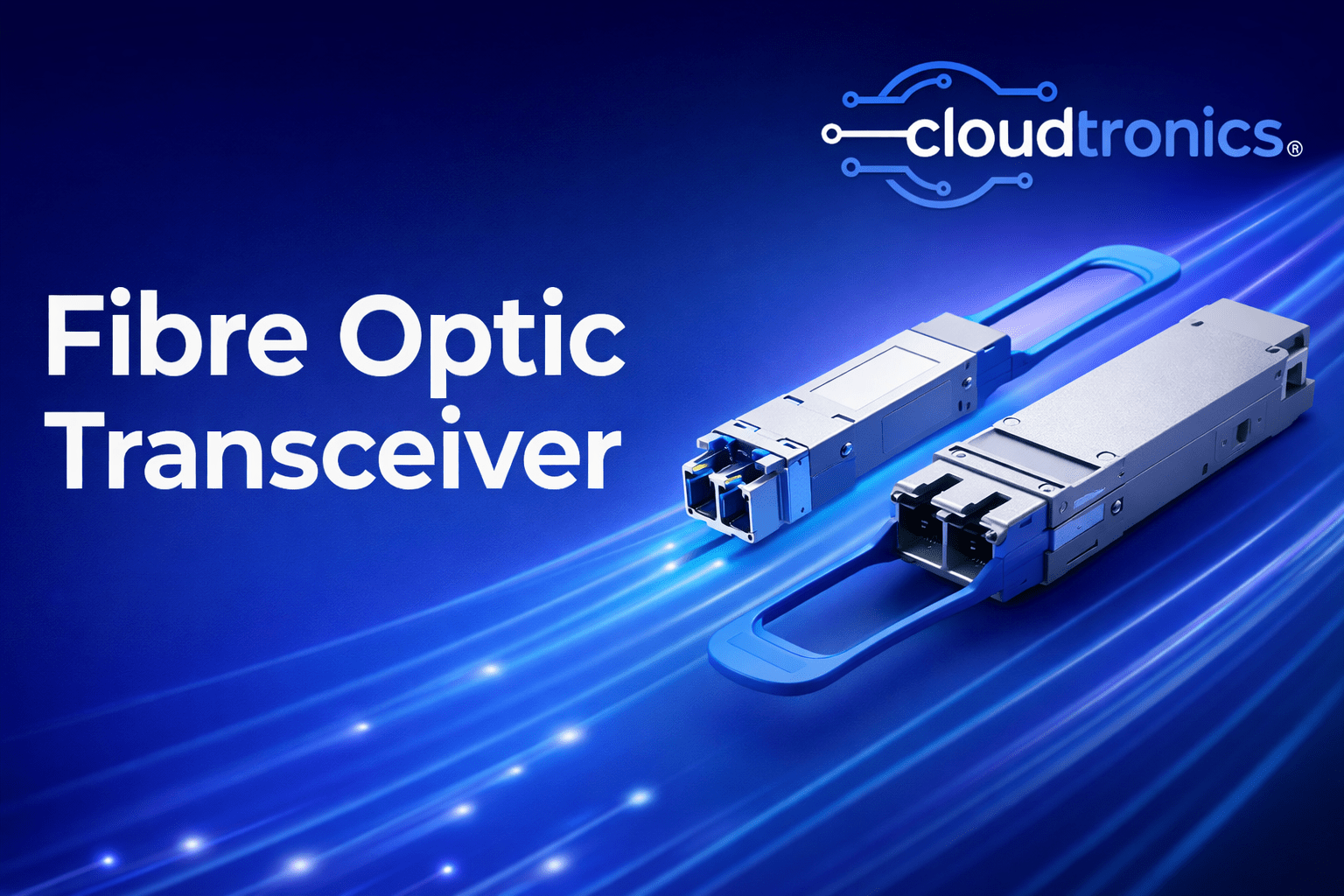
A fibre optics transceiver is a compact device that sends and receives data over fibre optic cable. It converts electrical signals from your switch or router into optical signals — and back again — at lightning speed.
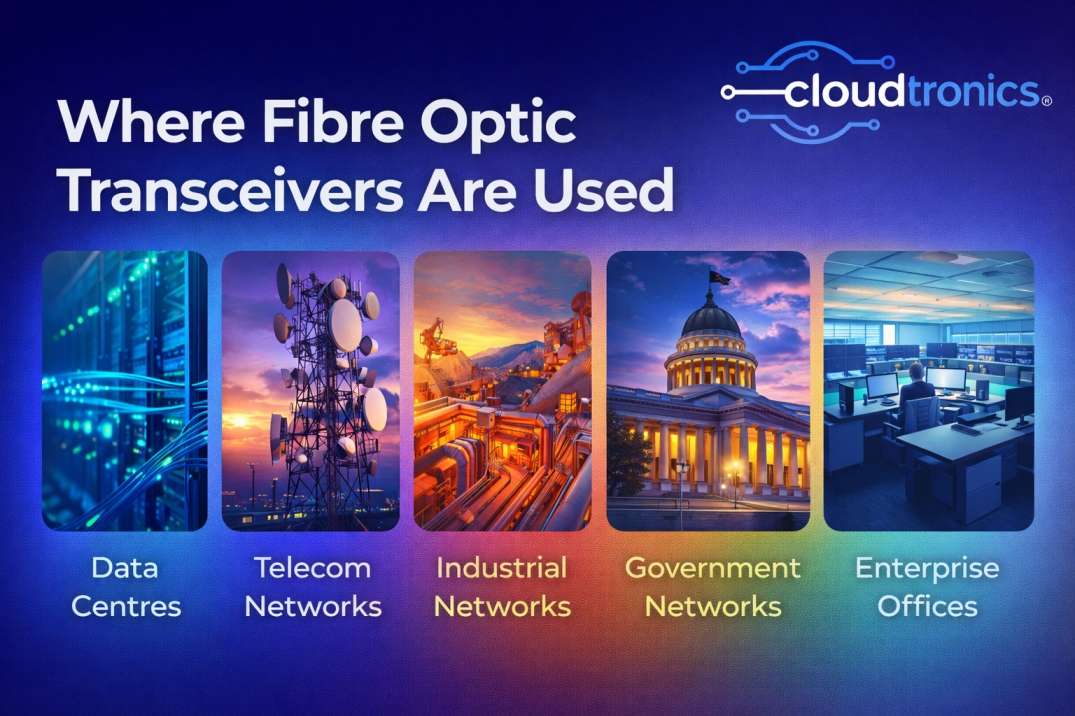
These modules plug directly into network equipment and are commonly used in:
- Data centres
- Telecom networks
- Enterprise LANs
- Industrial and mining networks
- Government and defence infrastructure
If your network needs speed, distance, and stability, fibre transceivers are non-negotiable.
Types of Fibre Optic Transceivers Used in Australia
Different networks need different horsepower. Here are the most common fibre optics transceiver types used across Australia:
1. SFP Transceivers
Ideal for 1Gbps links. Cost-effective and widely used in enterprise and access networks.
2. SFP+ Transceivers
Designed for 10Gbps speeds. Common in data centres and high-traffic enterprise backbones.
3. QSFP+ and QSFP28
Built for 40Gbps and 100Gbps networks. These are standard in modern Australian data centres and cloud environments.
Cloudtronics supplies Cisco-compatible, Juniper-compatible, and multi-vendor compatible fibre optic transceivers, fully tested before dispatch.
Single-Mode vs Multi-Mode Fibre Transceivers
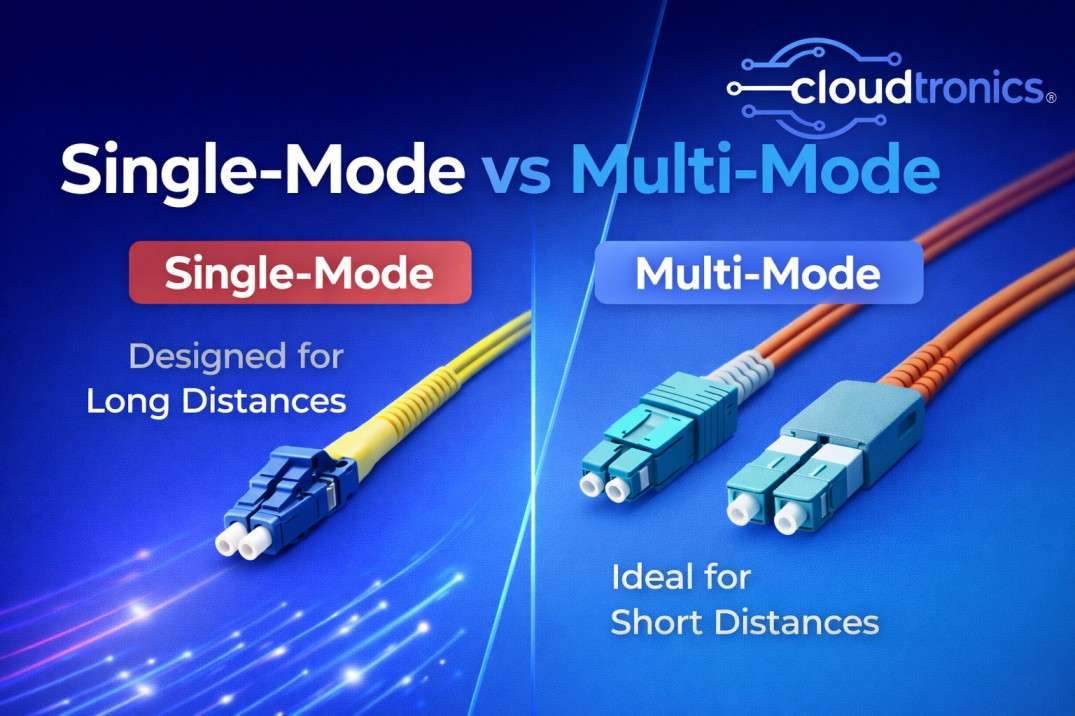
Choosing the wrong fibre type is an expensive mistake.
Single-Mode Fibre Optic Transceiver
Long distances (10km–120km)
Used in telecom, metro networks, and campus links
Higher precision, lower signal loss
Multi-Mode Fibre Optic Transceiver
Short distances (up to 400m)
Perfect for data centres and buildings
Lower cost for short-range links
If you’re unsure, Cloudtronics engineers help Australian customers select the right fibre optics transceiver for distance, speed, and environment — not guesswork.
Why Australian Businesses Choose Cloudtronics
Let’s be blunt: not all transceivers are created equal.
Australian networks face heat, dust, long distances, and uptime expectations that don’t tolerate failure. That’s why Cloudtronics focuses on quality, compliance, and local support.
What sets us apart:
Australian stock availability
Fully tested transceivers
Multi-vendor compatibility (no lock-in)
Fast delivery across Australia
Local technical support
Compliance and Network Compatibility
Every fibre optic transceiver supplied by Cloudtronics meets international standards such as:
IEEE 802.3
MSA (Multi-Source Agreement)
RoHS compliance
They are compatible with major networking brands without triggering vendor lock-in alarms — a big deal for Australian enterprises trying to control costs.
IEEE optical networking standards.
Final Thoughts: Don’t Cut Corners on Transceivers
A fibre optic transceiver might look small, but it’s the heartbeat of your network. Cheap modules cause packet loss, link flaps, and endless troubleshooting. That costs more in downtime than doing it right the first time.
Cloudtronics supplies trusted fibre optic transceivers in Australia, backed by real support and real testing — not just a spec sheet.
👉 Ready to upgrade your network?
Explore Cloudtronics’ full range of fibre optic transceiver solutions today.
Confused about fibre optic transceiver? Book a quick meeting with our team